Some trips are planned. Some are spontaneous.
And a few rare ones feel gently orchestrated by the universe long before we even know it. Our Puri Jagannath Yatra was exactly that. One evening, during a simple conversation, we spoke about Amma’s long-time wish to visit the sacred Jagannath Temple. The moment the idea appeared, something about it felt perfect – pure, almost destined. Without thinking twice, we booked our tickets from Bangalore – four months in advance. We had no idea how deeply this journey would touch us.
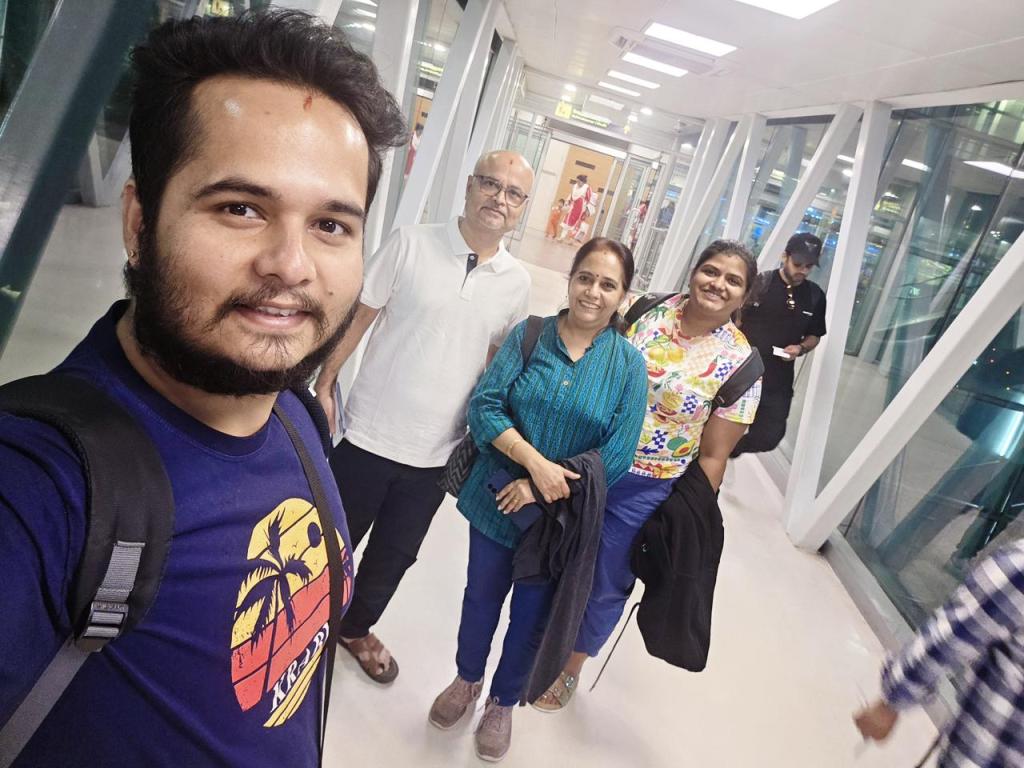
Right before we board our flight – Indigo 6E 3455
Arrival in Puri
On the Nov 13th evening, we took our flight to Bhubaneswar. A 2-hour flight turned into nearly 3 because of 45 minute delay, but excitement kept our spirits high. From the airport, the drive to Puri was refreshing – clean, wide, peaceful roads for 1 hour 15 minutes. We checked into ITC Fortune close to midnight. The hotel had a calming atmosphere, and our sea-facing rooms felt like a blessing in themselves.
Before sleeping, we fixed our plan: Meet Panda Ji (Manas Mishra) at 6:30–6:45 AM. (In Odisha, temple priests are called pandas – a hereditary, sacred tradition.). And we were ready!
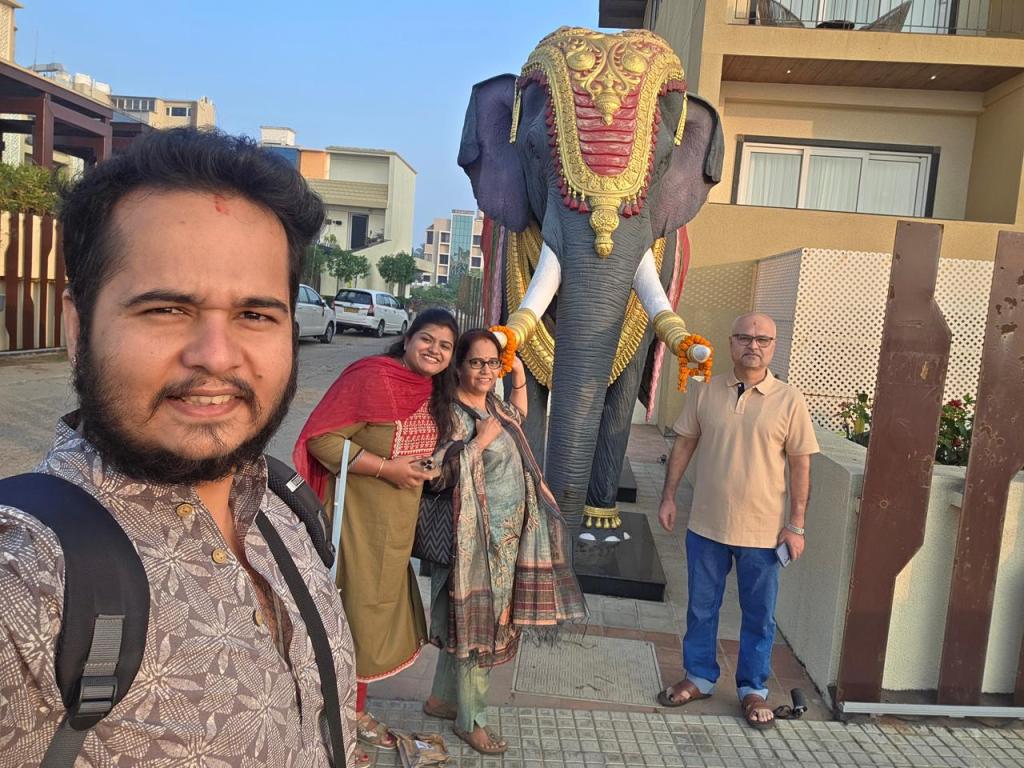
Entrance – Fortune ITC, Puri (Elephants always a crowd pleaser aren’t they?)
The First Morning Darshan
We parked 1.5 km away and took a tuk-tuk. The elderly rider pedalled patiently; we felt slightly guilty, but the ride felt like a little adventure. Security was tight because of a recent incident in Delhi.
Just before the inner sanctum, we came across a powerful idol of Lord Narasimha — tall, fierce, protective. Kushal, being a Narasimha devotee, felt blessed instantly. And then we saw it — the majestic 214-ft Gopuram of the Jagannath Temple. Built nearly 1,000–1,200 years ago during the reign of Maharaja Indradyumna, it stood timeless and commanding.
Inside, I expected small idols like in many South Indian temples. I was completely wrong. The deities in the sanctum stood massive, divine, overwhelming:
- Lord Jagannath (Krishna) — ~8 ft
- Lord Balabhadra — ~8 ft
- Devi Subhadra — ~5 ft
All nearly 4 ft. Carved from sacred neem wood (Daru Bramha) Rooted in ancient Savara tribal tradition. The atmosphere vibrated with devotion: Bengalis crying “Joi Jagannath,” Odias chanting “Jai Jagannath,” people crying silently, others calling out from deep within.
Normally, I pray quietly. But here, the chant felt like a heartbeat. Thanks to Panda Ji & Anjana Aunty, we got a rare 3-4 minutes inside. We stepped out, still overwhelmed.. and then ran right back in for a second Darshan. And in all that movement, Amma somehow managed to get Tulasi Prasada. She simply always finds a way, or rather, Prasad finds its way to her hands. 🙂 We walked out with our minds full and hearts overflowing.
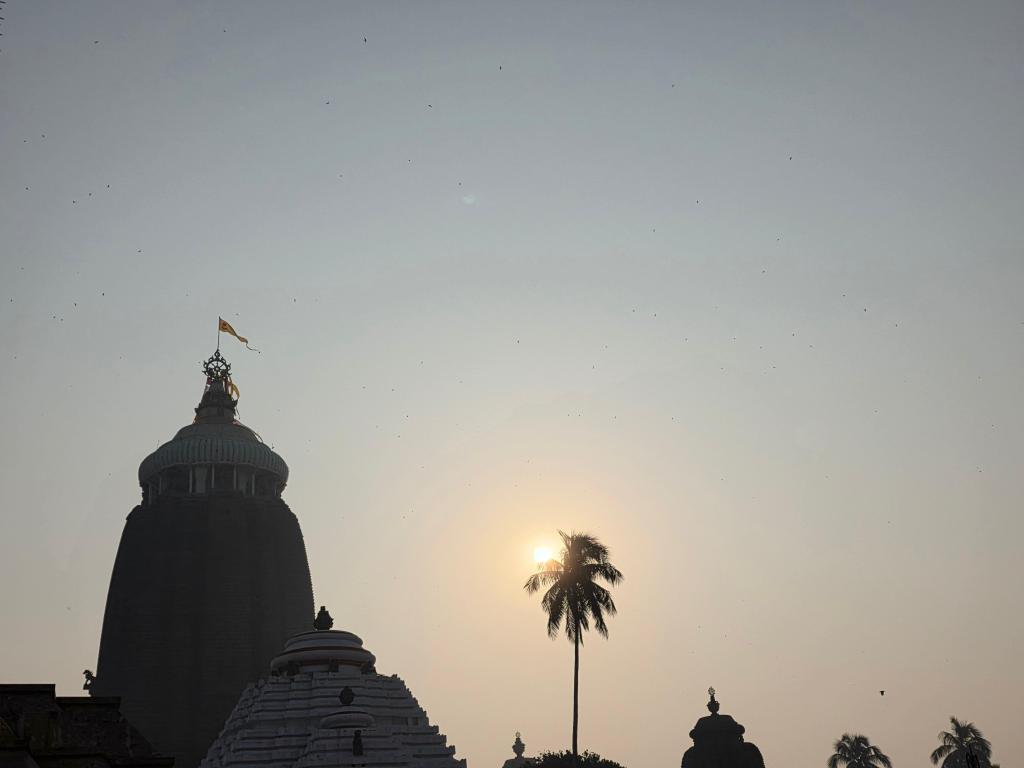
First Glimpse of Puri Jagannatha Temple at 6:45 in the morning
Koili Baikuntha (Vaikuntha) and the Divine Rebirth Ritual.
Next, Panda Ji took us to Koili Vaikuntha, the sacred space/burial ground inside the temple complex where old idols are placed after the extraordinary ritual of Nabakalebara. Nabakalebara – The Re-embodiment Every 12–19 years, the deities receive new wooden bodies. The divine life-force (Brahma Padartha) is transferred from old idols to new ones. The last Nabakalebara took place in 2015. Now that we know its magnitude, we’ve already decided – whenever the next one happens, we’ll watch it live if it’s broadcast.
Balabhadra, Subhadra & Jagannath
Monkeys, Chappan Bhog & Yashodha Maiya
Monkeys leapt fearlessly across the roofs – as if they were guardians of the temple. Their presence added a playful charm. Then came one of the most touching explanations: Why is Jagannath offered Chappan Bhog (56 dishes) every day. Because when Krishna lifted Govardhan Giri for 7 days straight, He didn’t eat even once. After the storm ended, Yashoda Maiya, terrified that her beloved Gopal had been hungry all week, cooked everything He loved — every sweet, every savoury, every dish she could think of. Krishna usually ate 8 meals a day. So she made: 8 meals × 7 days = 56 dishes → Chappan Bhog. It began not as royal tradition, but as a mother’s love. Jagannath receives Chappan Bhog daily even today.
Six pujas and six meals every single day, for centuries: Along with this, Puri follows a strict cycle of:
- Gopal Ballava
- Sakala Dhupa
- Bhoga Mandap
- Madhyana Dhupa
- Sandhya Dhupa
- Badasinghara
One of the most astonishing things we learned in Puri was about Jagannath’s kitchen – one of the largest functioning temple kitchen in the world. The kitchen has never stopped functioning, not even once in centuries. No famine, no cyclone, no political disturbance…nothing has ever halted the preparation of Mahaprasad.
The kitchen is closed to the public, but as we walked around the temple complex, we managed to catch a small glimpse through the old windows — hundreds of earthen pots, steam rising gently, and priests moving with quiet precision.
What touched us the most was something deeply symbolic: The designated temple cooks (Suaras and Mahasuaras) make sure they never inhale or enjoy the aroma of the food they cook. They cover their noses with cloth or look away from the vessels so they never receive even a moment of sensory pleasure.
The logic is simple and profoundly devotional : “It is Jagannath’s food. The bhog must reach Him first.” They cook only as a service, not as a sensory experience. Later, we got to taste the Mahabhog ourselves, and it felt like eating something with a consciousness of its own. Simple. Comforting. Divine.
Chilika Lake – A Noon Escape, Dolphins or Not
After our first darshan on the morning of 14th November, we had a relaxed breakfast and then decided to head to Chilika Lake. By the time we left, it was around 12:30–1:00 pm – bright, sunny and the perfect time for a mid-day outing. The drive was peaceful, and the lake looked absolutely endless – a calm blue sheet stretching into the horizon. Of course, we went in hoping to see lots of dolphins…but Chilika had other plans. We did get to see a lot of birds and we fed them too!
We waited, watched, leaned forward, scanned the water – and in the end, caught only two little fins for barely a second. A tiny bit disappointing, but the boat ride was still lovely.
There was something relaxing about:
• the gentle hum of the motor,
• the breeze brushing past,
• sunlight dancing on the water,
• and that big, open blue everywhere.
And then came the unexpected part – the tiny red crabs. We were honestly in a hurry to get back because we didn’t want to miss the evening flag-changing ritual back at the temple. But our boat rider was on a separate mission altogether. He insisted – almost a command – that we must see the famous Chilika red crabs. So he took a slight detour, stopped the boat, and proudly pointed: “Madam, red crab! Please take a look! 😀
And there they were 4 tiny ones not hundreds of tiny, bright red crabs rushing across the sand like they were late for a meeting like I imagined to be! Haha!
We found ourselves laughing because we had no choice but to admire them –
we just wanted to go back, but the boatman wanted us to leave as educated Chilika tourists. 😀
Even without many dolphins, the lake gave us:
• warm sun
• cool wind
• playful red crabs
• fishing boats in the distance
• and an hour of peaceful stillness
By the time we got off the boat – slightly tanned, slightly windblown – we felt calmer, lighter and ready to return to Puri for the big evening ritual.
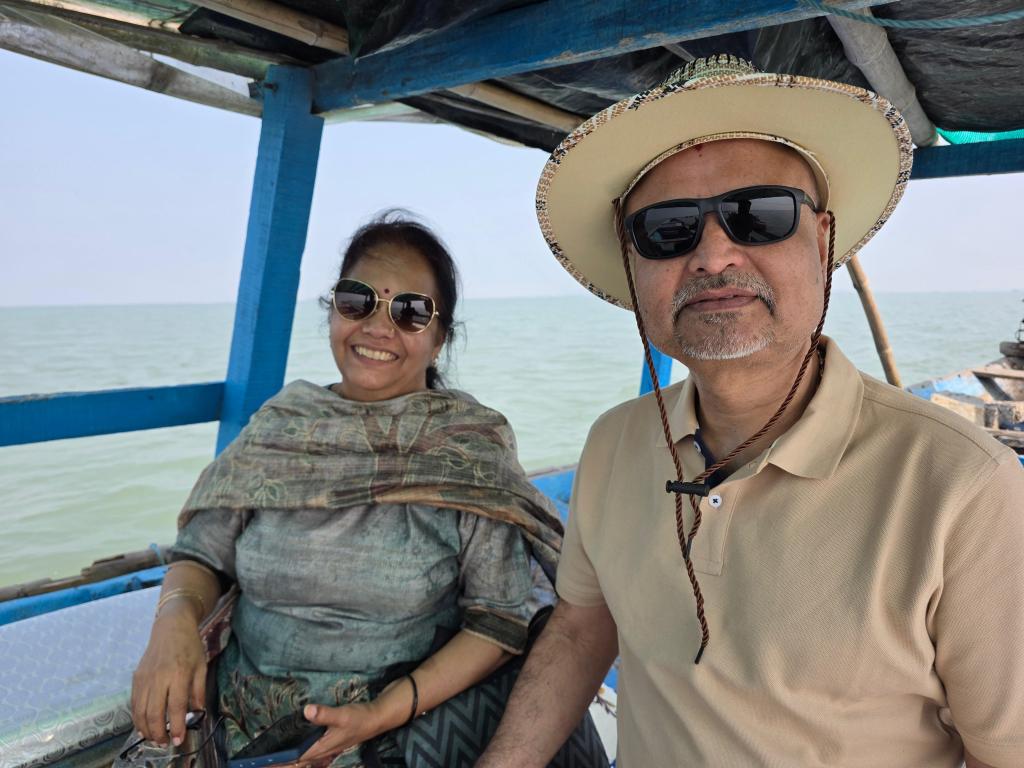
Enjoying their boat ride 🙂
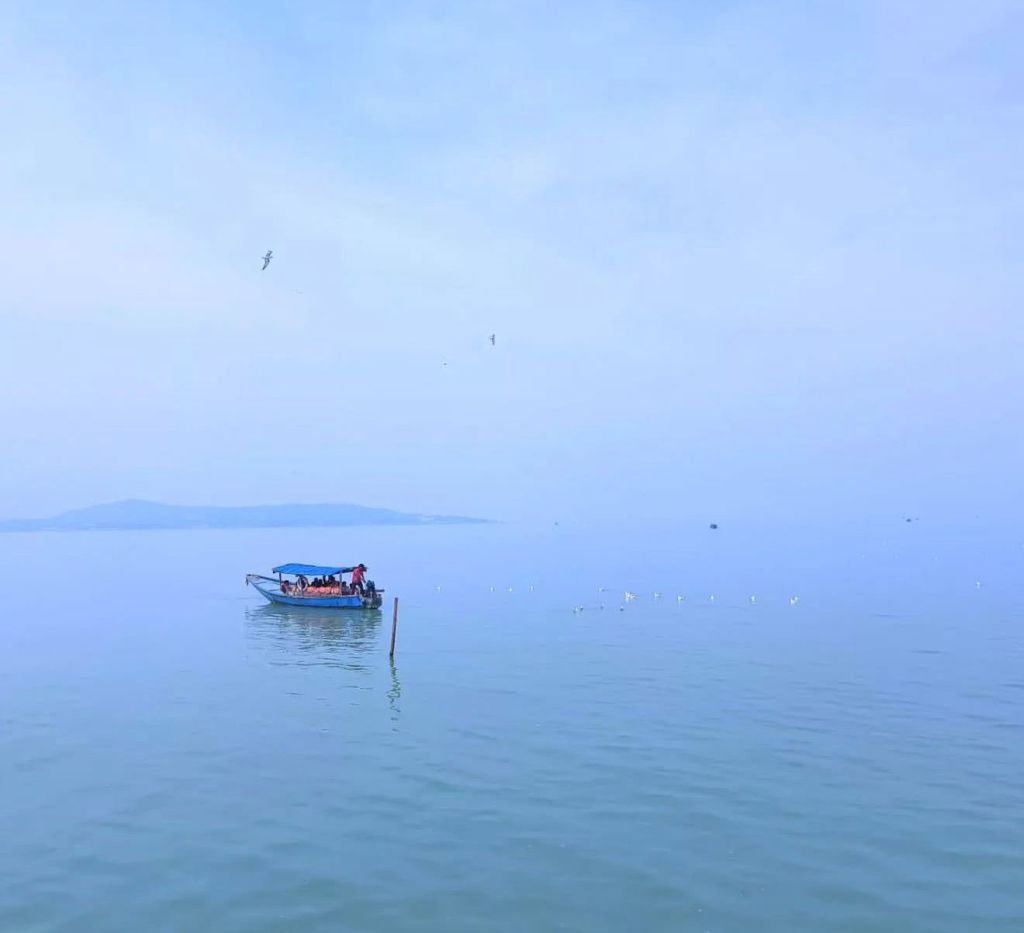
Calm & Serene
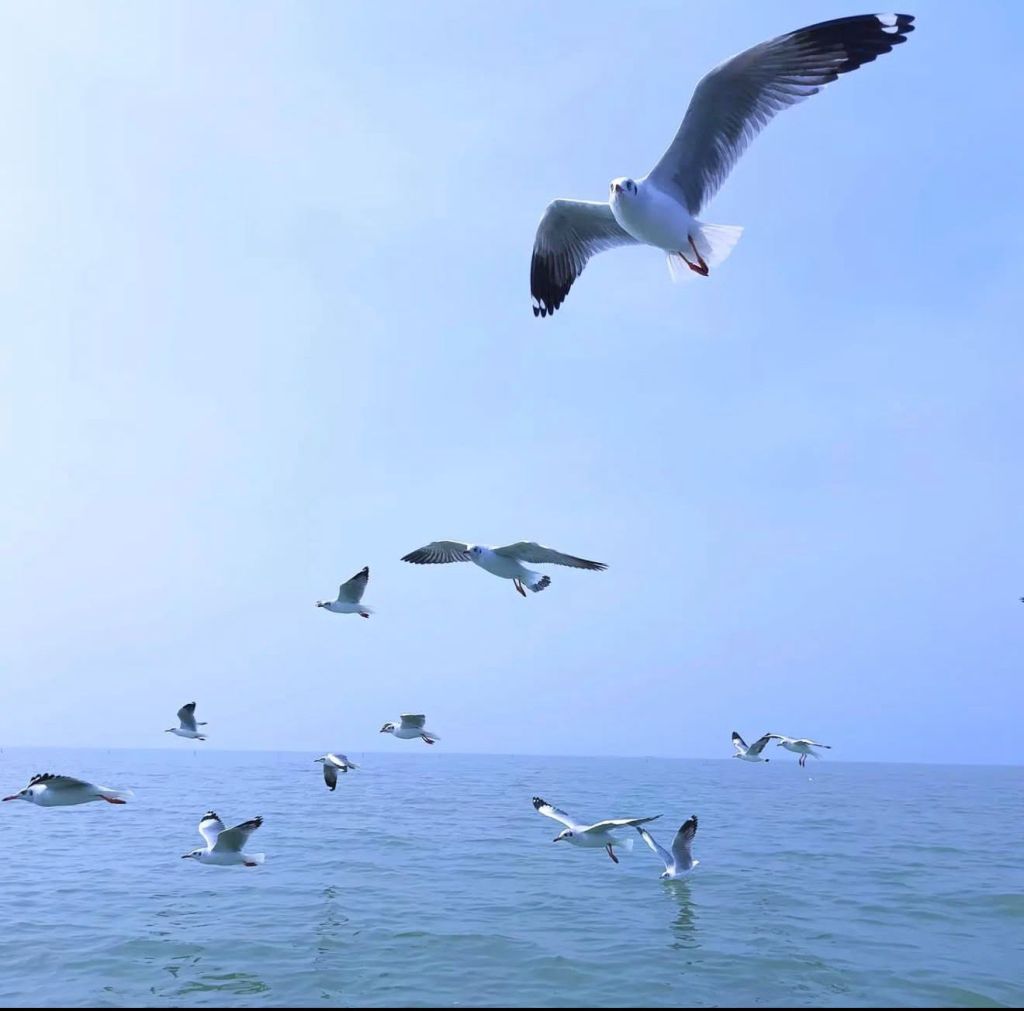
Wish I was a bird for a day 😉
The Evening Darshan and the Flag Changing Ritual
This was the most exciting part of the trip! We returned at 4:30 PM to witness something extraordinary. A single sevayat climbed the 214-ft Gopuram, barefoot, using only a traditional iron harness path. At the top, he performed Parikrama of the Nila Chakra – a sight that made everyone hold their breath.
He hoisted the daily flag (Patita Pavana Bana). We had placed a seva for a yellow flag, though we don’t know when ours will be hoisted. Patita Pavana Bana – The Flag of Compassion. “Patita Pavana” means the purifier of the fallen, the forgotten, the ones who cannot enter the temple. One sight of this flag is considered equivalent to Jagannath’s Darshan. The Nila Chakra,
- 11 ft Wide
- Made of Ashtadhatu (Eight Metals)
- Represents Sudarshan Chakra & the flag is directly tied into it
And the miracle? The flag always flutters in the opposite direction of the wind. Every single day. Without exception. No birds fly above the temple. No aircraft crosses its sky. The air above remains untouched. After the ritual, we went in for another darshan -crowded, chaotic, but somehow even deeper. And a reminder that the mind and six senses always run outward, but Jagannath pulls them inward.
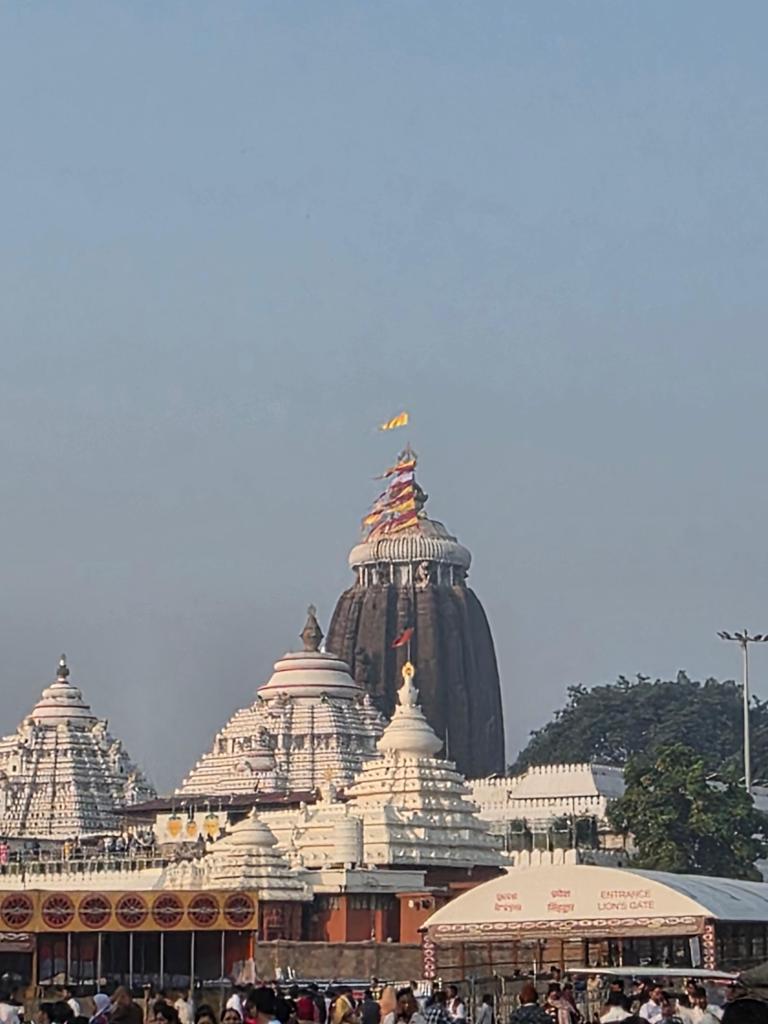
Morning it was an orange flag evening was changed to an yellow flag 🙂
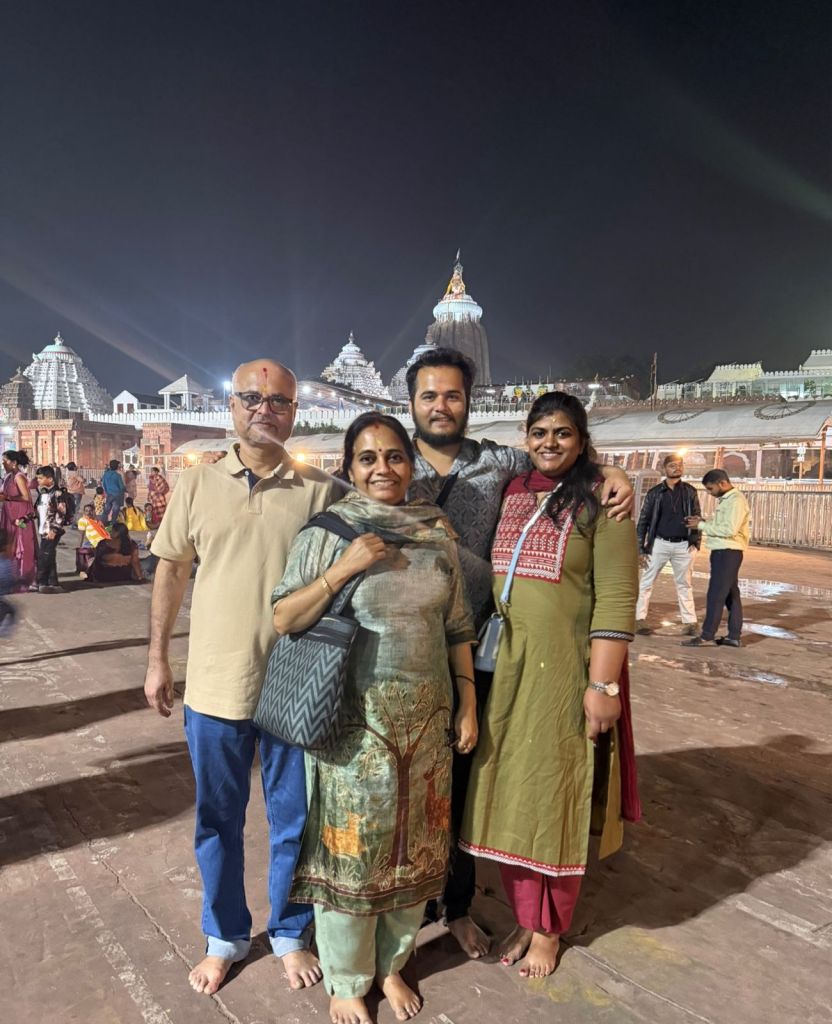
A good family portrait isn’t it? 🙂
Gundicha Temple and the Mighty Rathas
After darshan, we visited the Gundicha Temple, glowing under the sunset. This is where Jagannath stays for nine days during the Rath Yatra. Its his aunt’s house and he visits yearly once since Subhadra wished for it. Gundicha is also the name of Maharaja Indradhyumna’s wife. Its located on the the Bada Danda (Grand Road), we saw the exact spots where the colossal rathas are pulled: Nandighosha – Jagannath’s chariot , Taladhwaja – Balabhadra’s chariot &Darpadalana – Subhadra’s chariot Even without the festival, the air felt charged.
Bedi Hanuman – The Guardian of Puri
We then visited the Bedi Hanuman Temple, a small shrine close to the sea. According to legend, Hanuman was asked by Jagannath to guard Puri from the ocean. But Hanuman wandered off to Ayodhya for a while, and in his absence, the sea flooded the town. Lovingly, Jagannath tied Hanuman with symbolic chains (“bedi”) and told him: “You must stay here and protect Puri.” Since then, Bedi Hanuman stands guard, keeping the sea at bay. The temple felt humble yet powerful, especially with the sound of waves in the distance. After this long, soul-filled day, we returned to our cozy sea-view room. The sound of the waves soothed us into sleep – a perfect ending to a divine day.
Konark – Sun Temple
15th morning the next day, we drove to Konark. On the way, we visited many temples with hundreds of Shiva lingas, including Omkareshwar – a sight of pure devotion. Konark itself was bright, hot and breathtaking. The Sun Temple, though partially destroyed during Mughal invasions, still stands powerful – its stone wheels, dancers, musicians and architecture telling stories of another era. We did some souvenir shopping nearby.
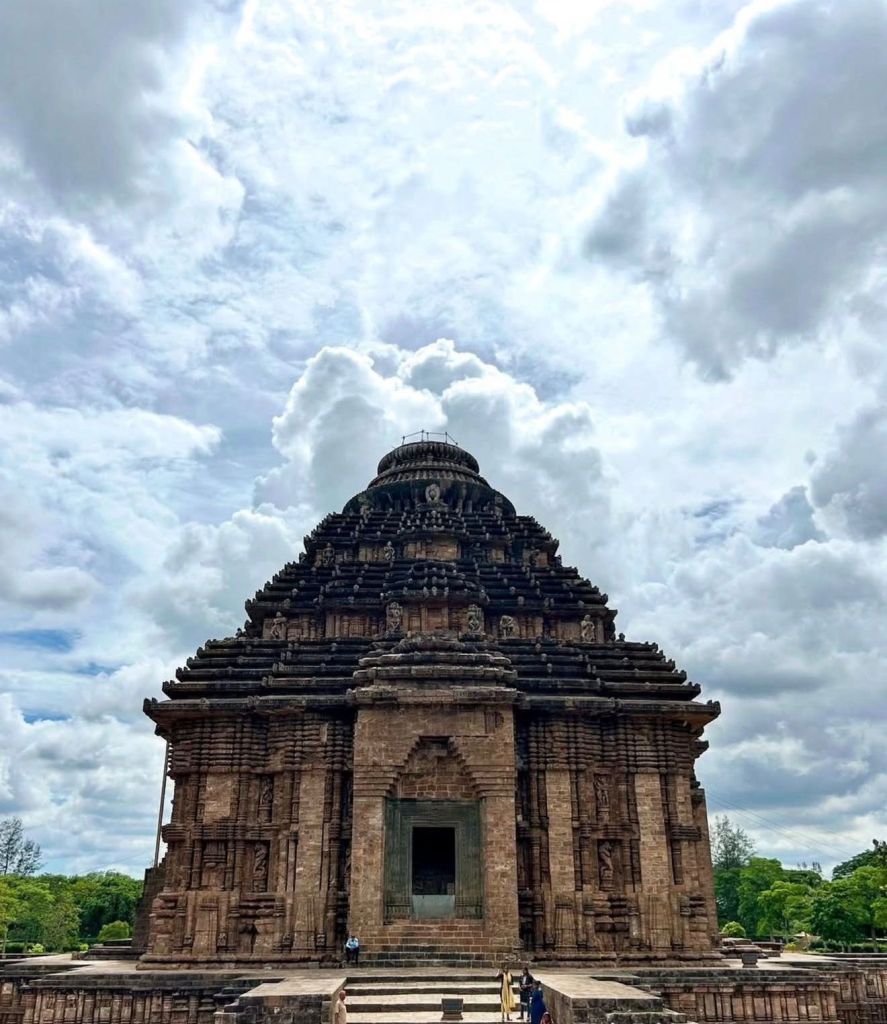
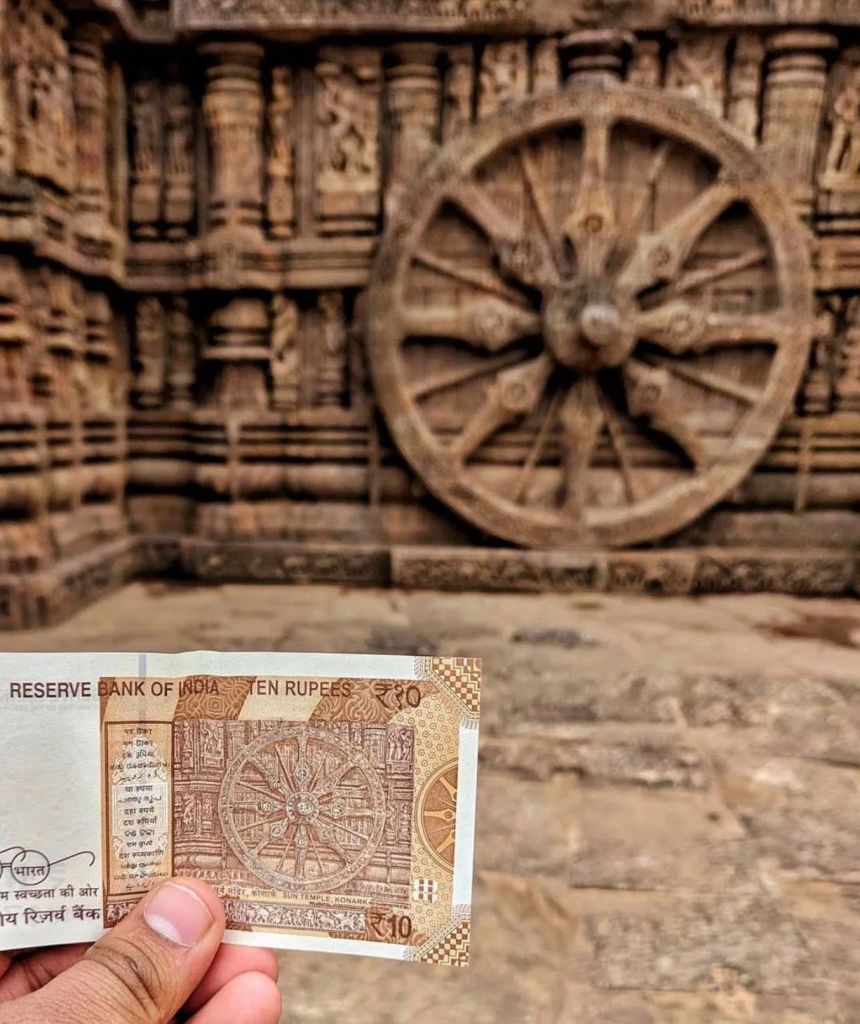
One of the restored Chakras!
Lingraj Temple, Pipli & Final leg of the trip!
The following day, we visited the magnificent Lingaraj Temple in Bhubaneswar – tall, ancient and spiritually heavy. It was older than the temple in Puri. Must visit! From there, we went to Pipli a small village, famous for Odisha’s handloom weaving Sambalpuri, Odisha’s Patta Chitra art etc. We did a bit of shopping and instead of an idol, we bought something deeply symbolic to Jagannath culture – A Jaagante — the metal circular bell used while we perform pujas. We ended the day with Puri’s delicious roshogullas, soft and sweet at the Agarwal’s Bhubaneshwar! Then we headed to the airport.
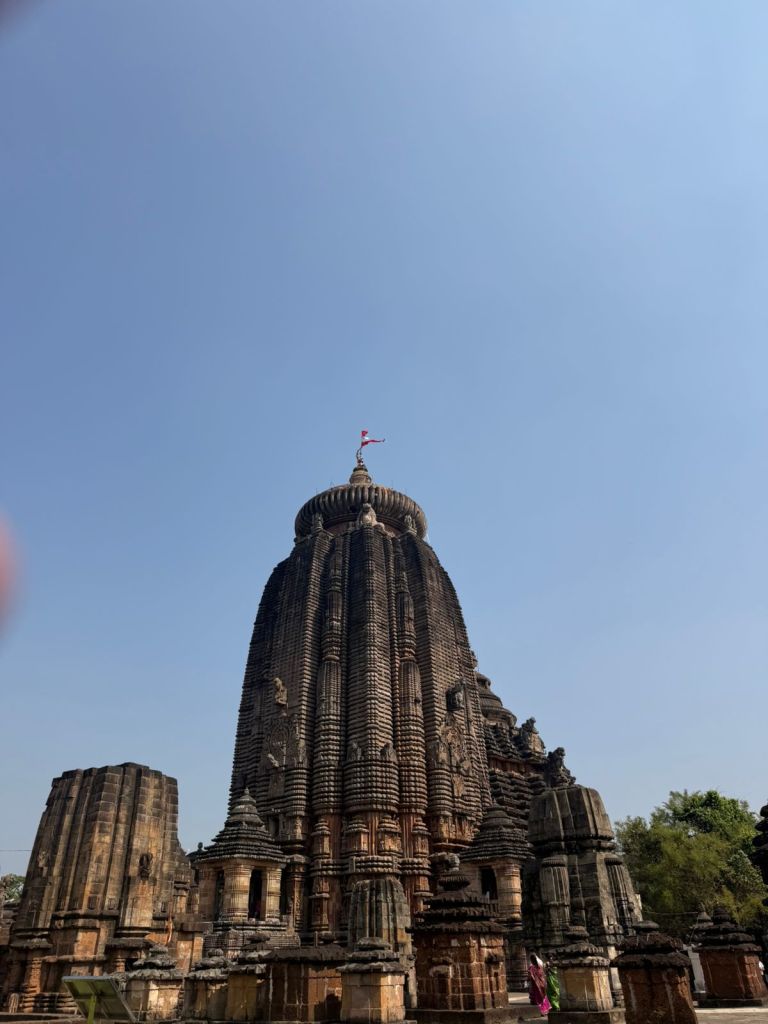
Lingaraj Temple – Bhubaneswar
Some journeys stay in your memory for a lifetime! This was one and also it was our first family trip after our wedding that made it even more special. Happy smiles. Quiet hearts. Back home – A feeling I cannot explain. Returning home felt different. Deeply grateful.
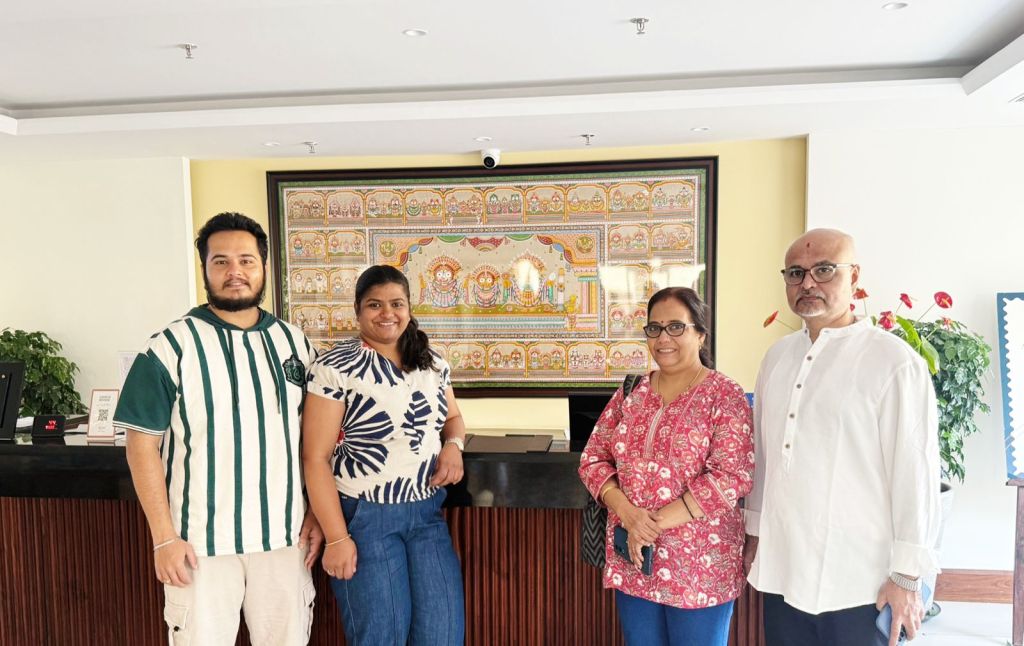
One final bye to Puri. Jai Jagannath 🙂
 prakruthivivekblog.com